Friend or Foe Tarot: Is This Person on Your Side?

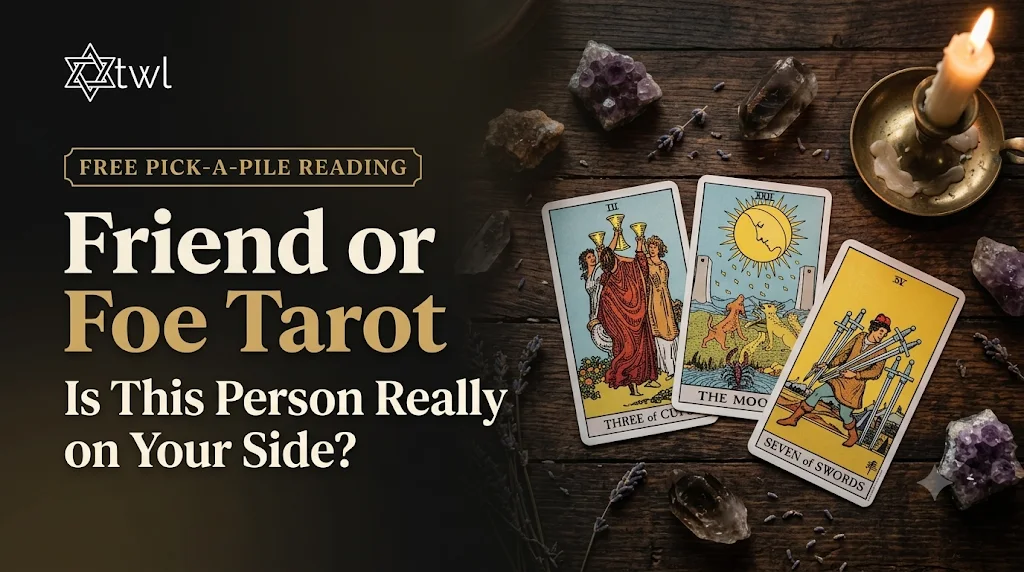
Friend or Foe Tarot

No tarot card can tell you whether someone is a friend or a foe.

A reading can help you look at the friendship honestly: what it rests on, how they treat you, and what you’d like to do about it. Pick one of three piles below for a free reading.

The Short Answer

  •       Tarot can’t label a person “fake” or “true”. It can describe how a friendship feels right now.
  •       This is a free pick-a-pile reading. Choose pile 1, 2 or 3, then read the three cards under that pile.
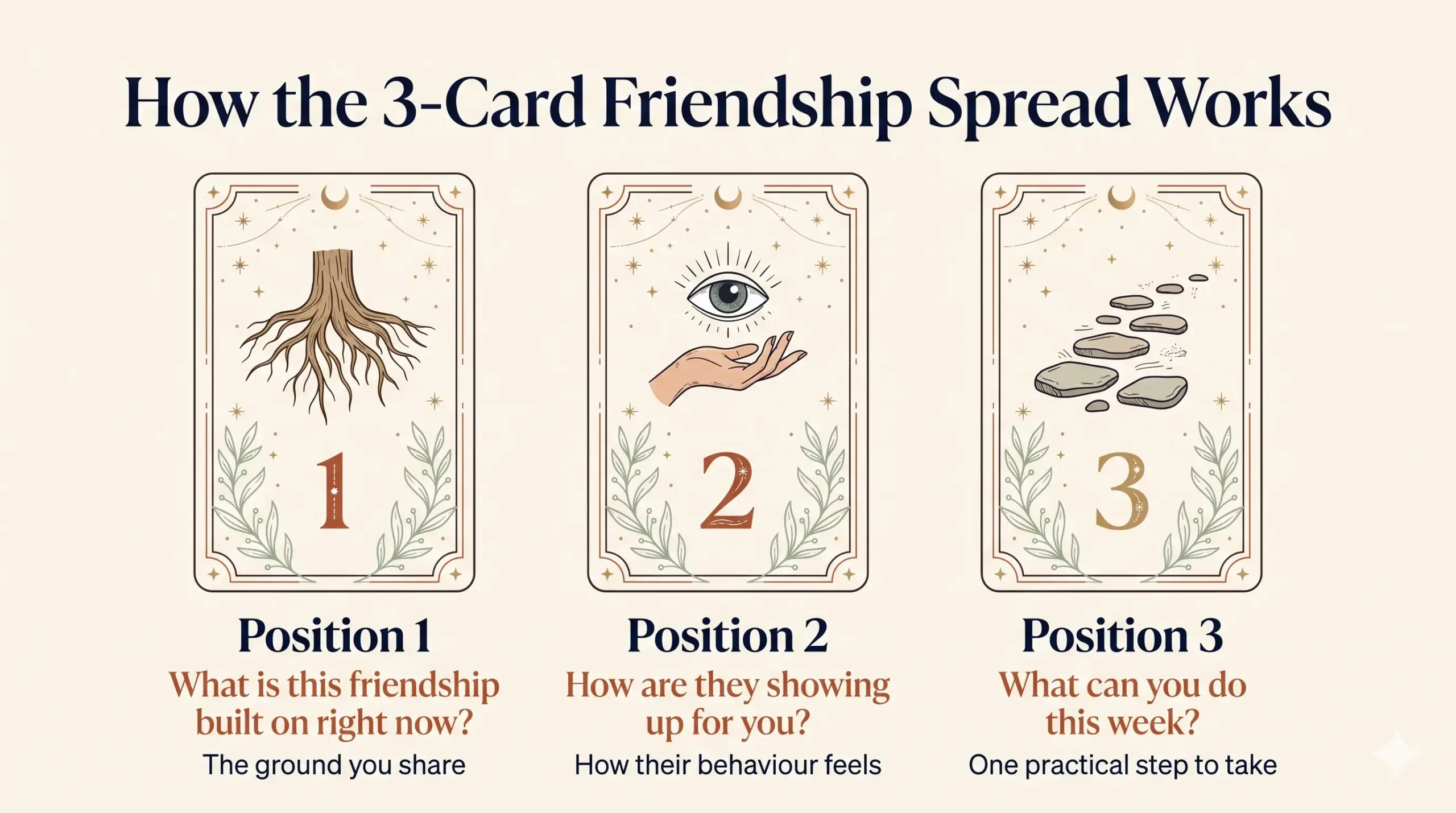
  •       Each pile answers the same three questions: what the friendship rests on, how they show up for you, and what you can do this week.
  •       No pile tells you to end a friendship. That decision belongs to you, and it should rest on what the person has actually done.

How does this friend or foe tarot reading work?

Think of one person: a friend, a colleague, a cousin, a flatmate.

Look at the three face-down piles and pick the one you’re drawn to. Then scroll to that pile and read its three cards in order.

This is a general reading. Each pile holds the same three cards for everyone who picks it, so it isn’t personalised to your situation.

You’ll see all three piles on the page. Read yours first, and notice if you find yourself hoping for a different one.

Position

Question

What the text describes

1

What is this friendship built on right now?

The ground the two of you share at the moment

2

How are they showing up for you?

How their behaviour toward you tends to feel

3

What can you do this week?

One step you can take, whatever the cards say

Select your card

For an accurate reading, you need to calm your mind. Please close your eyes and take two deep breaths and now choose the card number which instinctively draws your attention.

card choice 3

Note – This is a general reading and might not be personalized to your situation. For a personalized reading, click Book a Tarot Session

Find your message

Spread 1: when something isn't being said

Tarot Card Friendship Spread 

Pile 1 is the Seven of Swords, the Moon and the Ten of Wands. It describes a friendship where things go unspoken and one person carries more of the load.

What is this friendship built on? The Seven of Swords

The Seven of Swords is a card of things kept back. Here it suggests the friendship has topics you both step around: money, a falling-out, a third person, or plans one of you hasn’t shared.

That doesn’t make them dishonest. People hold things back out of embarrassment, fear of judgement or habit. Sometimes the thing not being said is on your side. Ask yourself what you’ve avoided telling them.

How are they showing up for you? The Moon

The Moon describes confusion. Their behaviour may feel inconsistent: warm one week, distant the next. You may be filling the gaps with guesses.

The useful question here is which parts you’ve seen and which parts you’ve assumed. Write down two or three things they actually did.

Then write down what else could explain each one. Read more about the Moon tarot card.

What can you do this week? The Ten of Wands

The Ten of Wands is a card of carrying too much. In this pile, it suggests you’re doing more of the work in this friendship. Maybe you’re the one who calls, plans, remembers and forgives.

This week, put one thing down. Don’t send the next message first, or say no to one favour. Then notice what they do. Their response tells you more than any card.

Spread 2: a friendship that gives back

Pile 2 is the Three of Cups, the Sun and the Ace of Pentacles. It describes a friendship with shared good times, open warmth and room to grow.

What is this friendship built on? The Three of Cups

The Three of Cups is the card of friends celebrating together. It suggests the friendship rests on real shared experience: people you both know, jokes only you two get, occasions you’ve marked together.

That’s a solid base. It doesn’t mean there’s never friction. It means there’s enough history to talk through friction when it comes.

How are they showing up for you? The Sun

The Sun describes openness and warmth. Their behaviour toward you likely feels straightforward. They’re pleased when things go well for you and they say so.

If you came to this reading with a doubt, check where it started. Was it something they did, or something someone told you about them? The Sun suggests you look at the first-hand picture. Read more about the Sun tarot card.

What can you do this week? The Ace of Pentacles

The Ace of Pentacles is a card of a small, practical beginning. Here it suggests putting something real into the friendship: time, help, or a plan you actually keep.

Pick one concrete thing this week. Fix a date to meet, return a favour, or tell them plainly that you value them. Friendships grow on small actions repeated, not on one big gesture.

Spread 3: when the friendship has turned competitive

Pile 3 is the Five of Swords, the Knight of Swords and the Eight of Cups. It describes a friendship with friction, quick words and a wish for some distance.

What is this friendship built on? The Five of Swords

The Five of Swords shows a contest where the winner walks off and the others are left with nothing.

Here it suggests the friendship has picked up a competitive edge. That might be over marks, jobs, money, partners or who’s “doing better”.

Competition isn’t the same as ill will. Friends who grew up comparing themselves often keep doing it as adults.

Ask whether the rivalry runs both ways, and whether either of you has named it.

.

How are they showing up for you? The Knight of Swords

The Knight of Swords is fast and blunt. Their behaviour toward you may feel sharp. They might interrupt, criticise, or decide for you without asking.

Bluntness can be careless rather than cruel. It can still hurt. The question isn’t what they intend. It’s whether you’ve told them how it lands, and what they did when you did.

What can you do this week? The Eight of Cups

The Eight of Cups shows someone walking away from cups they’ve stacked up. In this pile, it means stepping back from whatever drains you in this friendship. That isn’t the same as walking away from the person.

This week, take some space from the part that hurts. Skip the group chat for a few days, or decline one plan.

Then ask yourself, calmly, what you’d want the friendship to look like if it continued. You don’t have to decide anything yet.

Can tarot tell you if someone is a fake friend?

No. A tarot reading can’t tell you that a person is fake, disloyal or “a foe”. It isn’t a character test, and treating it as one is how people end friendships over a card.

Here’s why. A card is a symbol with a range of meanings. The Seven of Swords can mean secrecy, but it can also mean tact, strategy or self-protection. When you’re already doubting someone, you’ll read the worst meaning into whatever turns up.

What tarot can do:

  •       It can help you name what changed in the friendship, and roughly when.
  •       It can show you where your own hurt or fear is doing the reading.
  •       It can help you decide what to say to them, and what you want from the friendship.
  •       It can’t tell you what they say about you behind your back, or what they feel.

For a wider look at what readings can and can’t do, how accurate is tarot reading covers it honestly.

Which tarot cards are said to mean a fake friend?

Some cards are traditionally linked with betrayal or false friendship. Most of them are Swords, the suit of thought, conflict and words. Here is what tradition says, and what’s worth checking in real life instead.
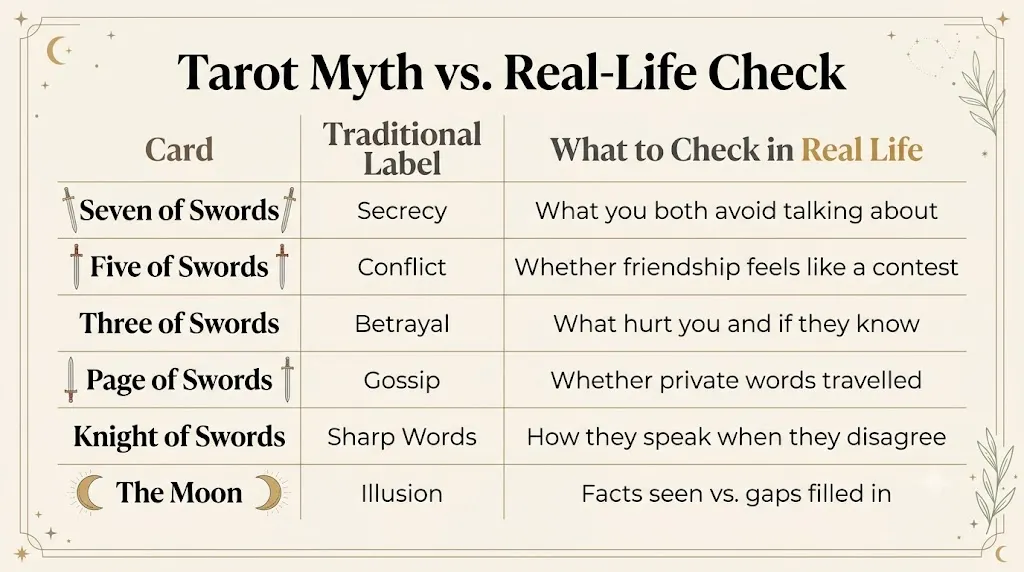
Tarot Myth vs Real Life Tarot

Card

What tradition links it with

What to actually look at

Seven of Swords

Secrecy, deception

What you both avoid talking about

Five of Swords

Conflict, winning at someone’s cost

Whether the friendship has become a contest

Three of Swords

Heartbreak, betrayal

What hurt you, and whether they know

Page of Swords

Gossip, watching from a distance

Whether things you said privately have travelled

Knight of Swords

Sharp words, rushing in

How they speak to you when they disagree

The Moon

Illusion, hidden motives

Which parts you’ve seen and which you’ve filled in


Cards traditionally linked with a true friend include the Three of Cups (shared celebration), the Six of Cups (old, easy affection), the Sun (warmth) and the Ten of Cups (belonging).

None of these cards proves anything about a person. The Three of Swords turns up for people who were hurt by a parent, a partner or a job, not only a friend.

[LAVANYA-INSERT: which card clients most often panic about in a friendship reading, and what it usually turns out to mean]

What should you look at instead of the cards?

Look at what they’ve actually done, what changed, and whether they’ll talk about it.

Write down three things you’ve noticed. Use plain facts, like “she cancelled the last three plans” or “he told the group what I said to him privately”. Next to each one, write what else could explain it. A new job, a new partner, a family illness and money trouble can all look like coldness from the outside.

Then check three things:

  1.   Do they keep your confidences? If what you say to them stays with them, that counts for a lot.
  2.   Are they glad when things go well for you? Watch their face and their words when you share good news.
  3.   Does it run both ways? Count who calls, who plans and who turns up when it matters.

That list is more useful than any spread. It’s also what you’d bring to a conversation with them, or to a reading with me.

Should you end a friendship because of a tarot reading?

No. End a friendship, or step back from one, because of what the person has done, not because of a card.

If the reading stirred something up, use it as a prompt. Ask yourself what you’ve already noticed and haven’t acted on. Most people who ask “is this a fake friend?” already have a specific moment in mind.

If you want to talk to them, keep it short and specific:

  1.   Name one thing that happened. “When you told the others about my job interview, I felt let down.”
  2.   Ask, don’t accuse. “Did you mean it the way it came across?”
  3.   Listen to the whole answer. Give it a day before deciding what it means.

How someone responds to a fair, calm question tells you more about the friendship than three cards can. If friendships keep fading for you, why friendships fall apart looks at the common patterns.

Can you use this reading for a colleague or a relative?

Yes. The three positions work for anyone you’re unsure about: a colleague, a manager, a cousin, an in-law or a neighbour.

At work, “foe” usually means competition for credit, a promotion or a manager’s attention. Pile 3 speaks to that most directly. With relatives, the doubt is often older than the current argument. The family tarot reading is built for that.

If it’s a romantic partner you’re unsure about, the relationship red flags reading looks at patterns rather than one suspicion. If you want to know what someone wants from you, try the what do they want from me reading.

When is this reading not the right tool?

Some situations need action, not a spread:

  •       Someone is threatening you, following you or sharing private photos. Tell someone you trust and contact the police or local support services.
  •       Money or property has been taken. Keep records and get practical or legal advice.
  •       Bullying at work or college. Write down dates and details and raise it through the formal route.
  •       You feel low, anxious or unsafe most days. Talk to a doctor or counsellor. In India, Tele-MANAS gives free, confidential mental health support on 14416.

A reading can help you think. It isn’t protection, and it shouldn’t delay any of these steps.

Should you read for yourself or book a reading?

This free reading is a good start if you want to think about one friendship calmly. A personal reading helps when the doubt keeps coming back, or when it involves a group, a family or your workplace.

In a session I won’t tell you whether someone is a foe. I’ll help you work out what you’ve noticed, what you want from the friendship, and how to say it.

You can see the session formats on the tarot reading sessions page, or read about relationship tarot readings with me. There’s no pressure to book. The free reading stays free.

If you’d rather read for your own questions, how to read tarot for yourself shows how to keep a self-reading honest when you’re hurt.

Other free friendship and relationship readings

Is this message personalized?

Only on a broad level, this reading will resonate with you. For detailed reading, write to me at founder@tarotwithlavanya.com or message me on WhatsApp book a tarot session with Lavanya on WhatsApp.

FAQs

Friendship Tarot Spread FAQs

Here are some common questions that people generally ask about Friendship Tarot Spread

Can tarot tell me if someone is a friend or a foe?

No. Tarot can’t label a person as a true friend or a fake one. A reading can describe how a friendship feels right now and help you decide what to do. Base any decision on what the person has actually done.

Yes. The pick-a-pile reading on this page is free, with no sign-up and no email. It’s a general reading: each pile shows the same three cards to everyone who picks it.

No card means a fake friend on its own. Tradition links the Seven of Swords, Five of Swords, Three of Swords and Page of Swords with secrecy, conflict, hurt or gossip. Each of them has other meanings too.

It usually points to something not being said. That could be on their side or yours. It’s a prompt to ask what you’re both avoiding, not proof that someone is lying.

The Three of Cups, Six of Cups, the Sun and the Ten of Cups are traditionally linked with warm, loyal friendship. Even so, a good card doesn’t replace what you see in how they treat you.

Pile 3 describes friction and a competitive edge, not a bad person. Its last card, the Eight of Cups, suggests stepping back from what drains you for a while. It doesn’t tell you to end the friendship.

You can read all three. If you keep looking for the pile that says what you want, notice that. The pile you were first drawn to is usually the one worth thinking about.

Readers disagree. Some won’t read about someone who isn’t present. This reading looks at your side of the friendship: what you notice, what you feel and what you can do. The ethical responsibility of tarot readers covers the wider question.

Share Post :

Lavanya Profile Image

Lavanya Arora

Lavanya Arora reads tarot and Chaldean numerology from Gurugram, with 4,000+ paid sessions since 2019 and 200+ verified 5-star Google reviews. She was named Best Tarot Reader in India 2025 at the GHP Mental Health Awards. She has helped clients navigate through difficult relationships, challenging jobs, and life-altering events.

Related blogs:

Recommended Reports For You

Yes/No tarot reading
Yes/No Tarot Reading
daily tarot reading
Daily Tarot Reading
daily career tarot reading online feature image
Daily Career Tarot

Check Out More

Tarot With Lavanya

Let's find the right plan for you!

Tarot With Lavanya — premium tarot reading and numerology consultancy by Lavanya Arora
How many area/s of your life do you need guidance in? *
What kind of guidance works for you? *

Chat with Lavanya on WhatsApp